Agentic Unity production
Seven Unity mobile games built by a builder/reviewer pair of AI coding agents, to measure how fast they can ship; I make the calls and play-test every build.
Results
- First game, milestones M0–M9
- ~33–43 h
- Measured agent time, against a plan estimate of 65.5 agent-days. The time log treats it as a lower bound, reconstructed from timestamps.
A set of production experiments at Game Foundry: seven Unity mobile games, each built by a builder agent and reviewed by an independent model, to measure how fast an agent pair can ship a game. I decide what gets built and play-test every build. All seven are in development.
Decided and play-tested every build of seven Unity mobile games built by a builder/reviewer pair of AI coding agents.
Overview
How fast can a pair of AI coding agents ship a real Unity game? At Game Foundry I run that experiment on seven casual mobile games, one genre each. A builder agent writes the code, an independent reviewer model checks every change, and I decide what gets built and play-test every build.
The method
Every game follows the same steps. Fact-checked genre research comes first, then a design doc whose open questions become numbered owner decisions. A milestone plan sets estimates, and a live time log and defect ledger track what actually happened.
What the first game measured
The first game, the zombie horde roguelite, went through milestones M0 to M9 in about 33–43 hours of measured agent time, against a plan estimate of 65.5 agent-days. The time log treats that figure as a lower bound: it is reconstructed from timestamps rather than clocked directly.
Verified content
Several of the puzzle games come with their own proof: solvers that certify every level can be finished, a physics validator, and a bot that plays the levels through.
What I owned
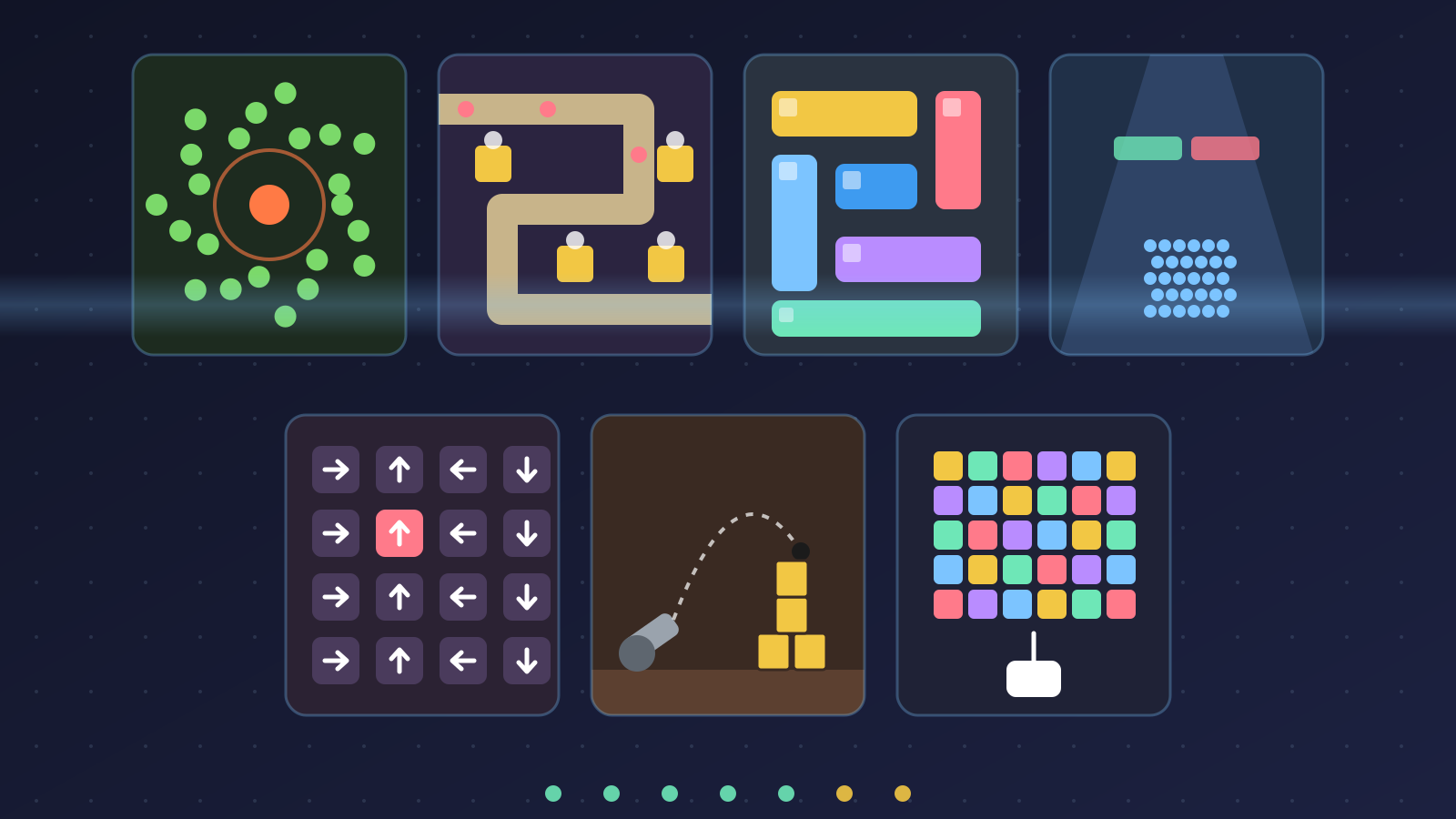
The Seven Games
- Swarm Breaker: a zombie horde roguelite.
- Spellguard: a hero tower defense.
- Gridlock Bus: a bus-traffic puzzle with a solver-certified 60-level campaign.
- Horde Gates: a crowd shooter with multiplier gates, its crowds rendered with VAT instancing.
- Pet Escape: an arrow tap-to-escape puzzle with a proof-producing solver.
- Siege Smash: a cannon physics puzzle with a physics validator and a bot that plays through the levels.
- Block Brigade: a color sort-shooter with 120 solver-certified levels and a picture-to-board converter.
The Method
- Fact-checked genre research, then a design doc with numbered owner decisions.
- A milestone plan with estimates, a live time log and a defect ledger.
- Cross-model review of every change.
My Role
- Owner decisions on design and scope, and a play-test of every build.
- Engine and mobile lanes: native engine work, device ports and touch controls.
Where AI fit in
- AI coding agents
- Second-model review
- Editor automation
A builder agent implements each milestone and an independent reviewer model reviews every change. Agents drive Unity headless or in a live editor through the CLI. I make the owner decisions and play-test every build.